
Build Fight
KAYAC Inc.Arcade
4.566.00 Reviews
- Version
- 082
- Installs
- 1.00M
- Age Rating
- Teen
Screenshots
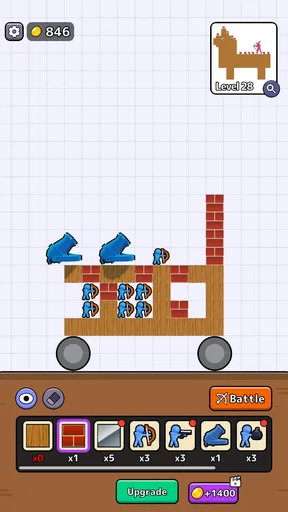
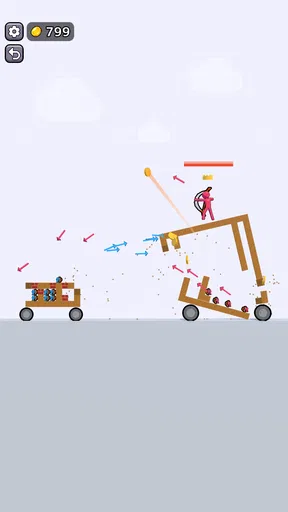
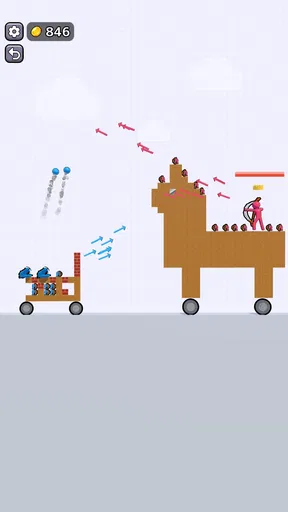
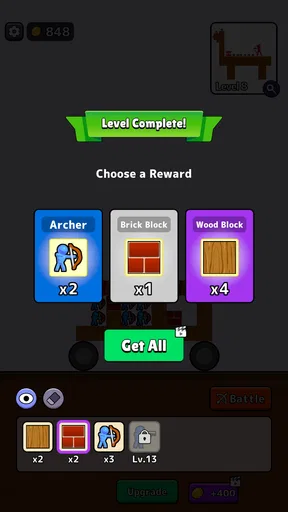
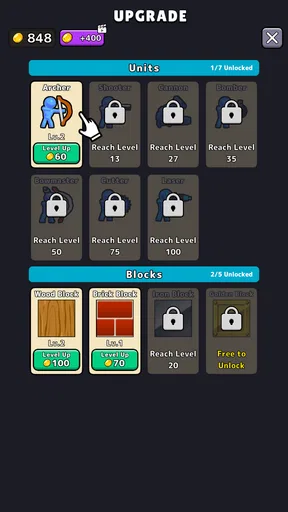
Our Review of Build Fight
 Analysis by Appyee
I went into Build Fight expecting a quick arcade distraction, and that is exactly where it makes the most sense. Its central idea is easy to understand: build with blocks, then use that construction in a fight. That combination gives the game a more active feel than a standard stacking title, because every placement can matter beyond appearance. You are not simply making something neat; you are trying to create a structure that helps you survive the next exchange.
That simple pitch also explains the game’s appeal. It is approachable enough for a short session, but the building element gives you more to think about than a purely reflex-based arcade game. I found myself switching between speed and caution: placing blocks quickly can keep momentum, while taking an extra moment to shape a better position can be more valuable when the fight becomes difficult. For players who like compact games with a tactical twist, this is an interesting combination.
How the block-building fight feels in practice
The most enjoyable part of the experience is the constant tension between construction and action. A block is not just a decorative piece. It can represent protection, a route, a platform, or a way to make the next move safer. That makes the screen feel more purposeful than it would in a conventional arcade game where the only goal is to dodge or attack at the right moment.
I also like that the concept does not require a long explanation before you understand what you are doing. The store summary describes it as building in blocks, while the short description frames it as a build fight. Those two ideas are enough to set the expectation: this is not a slow creative sandbox, and it is not a complex strategy game with a large rulebook. It is an arcade game built around making decisions quickly.
That distinction is important for choosing the right audience. If you want a relaxed construction game where you can spend a long time perfecting a design, this probably will not replace one. The fighting side gives building a deadline and a purpose. On the other hand, if ordinary arcade games feel too repetitive because they only test reaction speed, the construction layer gives you a reason to plan.
A useful rhythm for short sessions
My preferred way to play is in short bursts. I start by watching how much room I have and resist the temptation to place blocks immediately. The first few actions are useful for understanding the rhythm of the encounter. Once I know whether the situation rewards fast expansion or compact defense, I build with a clearer objective instead of filling space at random.
One practical tip is to treat every block as part of a route. Rather than asking, “Where can I put this?” I ask, “Where will I need to move next?” That small change in thinking makes the building phase more efficient. It also reduces the common arcade mistake of creating a structure that looks useful but leaves no comfortable way to continue.
Another helpful habit is to avoid using all available space too early. Keeping a little flexibility gives you room to respond when the fight changes. In my experience, the strongest-looking construction is not always the most useful one. A smaller arrangement that preserves options can be better than a larger arrangement that locks you into a single approach.
Why the arcade format works here
As an arcade game, Build Fight benefits from a focused premise. It does not need a huge world or a long story to justify a session. The pleasure comes from seeing whether a fast construction decision works under pressure. That makes it a natural choice when you have a few spare minutes and want something more engaging than passive scrolling.
The free price also lowers the barrier to trying it. I would be comfortable suggesting it to someone who enjoys experimenting with unusual arcade mechanics and does not want to commit money before knowing whether the controls and pace suit them. The Teen content rating is worth keeping in mind for families, though; it is not presented as a game aimed at very young children.
At the same time, free access does not automatically make it ideal for everyone. Players who dislike repeated attempts, quick failures, or learning through trial and error may find the loop frustrating. The appeal depends on wanting to improve your decisions from one attempt to the next. If you need a calm game with predictable progress, a traditional puzzle or creative builder may be a better fit.
What its current version tells me about the experience
The current version is 082, which gives the game a more established feel than a first experimental release. I see that as a positive sign when judging whether it is worth installing today: the version number suggests that the project has already moved beyond its earliest stage. Still, I would separate that observation from any promise about future additions. A current version can show ongoing development, but it does not guarantee a particular feature or direction later.
The game was released on December 3, 2025, and it comes from KAYAC Inc. That combination of a recent release and an already substantial version number makes the product’s present state more interesting than the launch description alone. I would approach it as a game that has been actively shaped, while judging it by the mechanics available now rather than by imagined updates.
For existing players, the practical takeaway is that the current build should be treated as the main reference point. If you installed an earlier version, it is sensible to give the game another look instead of assuming that your first impression still represents it perfectly. The most meaningful changes in a game like this are often felt through pacing, balance, and the way building decisions connect to combat, not through a flashy headline.
That is also why I would not overstate the version number. It tells me the game has progressed, but it does not tell me that every weakness has disappeared. Build Fight still has to earn long-term attention through the quality of its moment-to-moment choices. A polished version of a narrow idea can be enjoyable, but it remains a narrow idea.
What new players should understand before starting
New players should expect the first sessions to be partly instructional even if the controls are easy to grasp. The game’s real challenge is not learning that blocks can be placed; it is learning when construction helps and when it slows you down. I recommend starting with a defensive mindset, then gradually testing more ambitious layouts once you understand how much time each decision costs.
Do not judge the game only by the first attempt. The building-and-fighting relationship becomes clearer after you have seen a few different situations. A failed structure can teach you that you built too broadly, reacted too late, or focused on appearance instead of movement. That kind of feedback is where the replay value lives.
For someone downloading it during a commute or a short break, I would suggest turning the first session into a learning run rather than chasing a perfect result. Notice which placements give you room, which ones create awkward movement, and whether you prefer quick structures or careful ones. That approach makes the game feel less random and helps you decide quickly whether its style matches you.
How it compares with familiar arcade alternatives
Compared with a standard endless runner, Build Fight asks for more deliberate input. An endless runner usually rewards memorizing patterns and reacting to obstacles, while this game adds a construction decision before or during the danger. That makes it less immediately automatic, but potentially more satisfying for players who want their choices to shape the situation.
Compared with a block puzzle, it is more urgent and less meditative. A puzzle player can often concentrate on arranging pieces for a clean result; here, the fight changes the value of each placement. The best move is not necessarily the one that creates the prettiest or most efficient pattern. It is the one that keeps you in a workable position when pressure arrives.
Compared with a conventional fighting game, the appeal is less about mastering a large move set and more about preparing the space around you. That makes it easier to approach, but it may feel lightweight to players who want deep character systems, elaborate combos, or a strong competitive structure. Build Fight is better understood as an arcade hybrid than as a replacement for a full fighting game.
The trade-off is clear: you get a distinctive hook and quick accessibility, but not necessarily the breadth of a larger genre specialist. I would choose it when I want a compact experiment in building under pressure. I would choose another game when I want a long progression system, extensive customization, or a story that carries the experience between matches.
Everyday situations where it makes sense
One realistic use case is a ten-minute wait before an appointment. I can start a session, focus on the immediate construction problem, and stop without needing to remember a complicated plot. The game’s arcade structure suits that kind of fragmented time better than a role-playing game that expects a longer commitment.
It can also work as a change of pace after playing a more demanding competitive title. Because the idea is easier to grasp, I do not need to spend the whole session studying systems. Yet the block placement gives me something to consider, so it does not feel as empty as an arcade game based only on tapping at the right moment.
For families, I would check whether the Teen rating fits the intended player before installing it. For adults and older teenagers who enjoy quick tactical challenges, the concept is easy to recommend as a free trial. I would be more cautious with anyone who becomes annoyed by restarting or who expects every construction decision to have a clearly explained result.
The friction points that matter
The biggest limitation is the narrowness of the central loop. Building and fighting is a strong starting idea, but the game’s long-term appeal depends on how much variety the encounters and decisions provide. If you need constant novelty, you may eventually feel that you have understood the basic relationship between placement and survival.
There is also a mental cost to switching rapidly between planning and reaction. Some players will enjoy that pressure; others may find it less comfortable than a game that cleanly separates its puzzle and action phases. If you prefer to think without interruption, the fighting element can make construction feel rushed. If you prefer pure action, the building step may feel like an obstacle between exciting moments.
Another point is that experimentation can be more rewarding than immediate success. I would not recommend it to someone looking for a game that explains every optimal strategy upfront. Its value comes from noticing patterns and adjusting your own approach. That is a genuine strength for curious players, but a weakness for anyone who wants a highly guided experience.
Device compatibility is relatively broad, with a minimum operating system of Android 7.0. That makes it accessible to people who are not using the newest phone, although compatibility alone does not determine how comfortable the game feels. The quality of the experience still depends on the responsiveness of the device and the player’s tolerance for quick input.
Who should install it, and who should pass
I would recommend Build Fight to players who enjoy short arcade sessions, quick tactical choices, and games that turn a familiar block mechanic into something more active. It is especially appealing if you like discovering your own reliable patterns instead of following a long tutorial. The free entry point makes experimenting with it straightforward.
I would skip it if your priority is a deep construction sandbox, a story-driven adventure, or a full-scale fighting game. It is also not my first choice for someone who wants a completely relaxing experience. The game’s identity comes from pressure, and removing that pressure would remove much of what makes the concept different.
The public response is encouraging: it holds a 4.5 average from around ten thousand ratings, with more than a million installs. I read those figures as evidence that the premise has reached a sizeable audience and connected with many players, not as proof that every person will enjoy it. The audience size makes it easier to take seriously, while the individual fit still depends on whether you like its particular mix of construction and combat.
My recommendation after spending time with it
My overall impression is positive, with a clear qualification. Build Fight is at its best when I treat it as a focused arcade experiment rather than a complete replacement for every game in its category. The block-building mechanic gives ordinary quick play a useful layer of decision-making, and the fight keeps construction from becoming passive.
The most valuable way to play is to build with an exit in mind, preserve flexibility, and use early attempts to learn rather than simply chase a win. Those habits reveal the game’s better qualities faster than random placement does. They also expose its limits: once the central loop stops feeling fresh, there may be less here for players who need broad progression or extensive variety.
For a free game from KAYAC Inc. with a Teen rating and a current version of 082, I think it is worth trying if the premise sounds appealing. I would install it for short breaks, casual experimentation, and moments when I want an arcade game that asks me to make more than one kind of decision. I would not install it expecting a large strategic universe. Its strongest feature is the pressure created when every block has to serve both construction and survival.
That focus is also what I will watch as the game continues to evolve. Future development will matter most if it keeps the building-and-fighting relationship meaningful rather than merely adding more activity around it. For now, Build Fight earns my recommendation as a distinctive, easy-to-try arcade title, provided you enjoy learning through quick attempts and do not need a much larger game wrapped around its central idea.
Verdict
Strengths of Build Fight
- Fast-paced matches keep gameplay exciting and easy to replay.
- Building mechanics add strategy beyond simple shooting.
- Large player base can make matchmaking relatively quick.
- Frequent challenges provide extra goals outside regular matches.
- Colorful visuals run smoothly on many modern mobile devices.
Limitations of Build Fight
- Touch controls may feel imprecise during intense building battles.
- New players can struggle against experienced builders.
- Matches may become repetitive without regular content updates.
- Competitive play can encourage long sessions and frustration.
- Some cosmetic items or advantages may require in-app purchases.
Other Releases by KAYAC Inc.
View All
Ball Run 2048: merge number
Casual4.1

Number Master: Run and merge
Action4.4

Type Spin: alphabet run game
Racing4.5

Draw Action: Freestyle Fight
Action4.3
Similar Picks in This Category
View All
Subway Surfers
SYBO Games4.6

Stickman Party 234 MiniGames
PlayMax Game Studio4.6

Subway Princess Runner
Ivy4.4

Temple Run
Imangi Studios4.2

Zombie Tsunami
Mobigame SAS4.6

Stack Ball - Crash Platforms
CASUAL AZUR GAMES4.5
Frequently Asked Questions
What is Build Fight and how does it work?
Build Fight is a competitive building game mode where players test their creativity, speed, and combat skills in structured arenas. Depending on the version or platform you use, you may build defensive structures, edit them quickly, and battle opponents afterward. The main appeal is practicing construction and fighting mechanics in a controlled environment rather than exploring a traditional open-world match.
Can I play Build Fight on Android or iOS devices?
Availability depends on which Build Fight version you mean and how it is distributed. Some experiences are accessed through a supported game platform rather than installed as a separate mobile application. Before downloading anything, check the official store listing, required operating system, developer name, device compatibility, and recent user reviews. Avoid unofficial APK files or websites promising modified versions.
Does Build Fight require an internet connection?
Yes, Build Fight generally requires an active internet connection because matches, matchmaking, player actions, and account information are handled online. A stable Wi-Fi or mobile-data connection is recommended, especially during fast building and combat situations. Weak connectivity can cause delay, interrupted matches, or disconnections. Data usage may also increase during longer sessions, so mobile users should monitor their allowance.
Is Build Fight suitable for beginners?
Build Fight can be challenging for new players, but it is also a useful way to improve quickly. Beginners may initially struggle with building speed, editing, aiming, and reacting under pressure. Start with practice rounds, learn a few simple structures, and adjust the control layout or sensitivity gradually. Playing against friends or lower-skilled opponents can make the learning process less frustrating.
Are there purchases, advertisements, or safety concerns?
The costs and monetization features depend on the official platform hosting the Build Fight experience. Some versions may be free to access but connected to a larger game that offers optional purchases, while others may include advertising or paid content. Always download through an official store or trusted game launcher, review requested permissions, enable parental controls where appropriate, and never share account credentials with third-party services.
Play our best games!


